
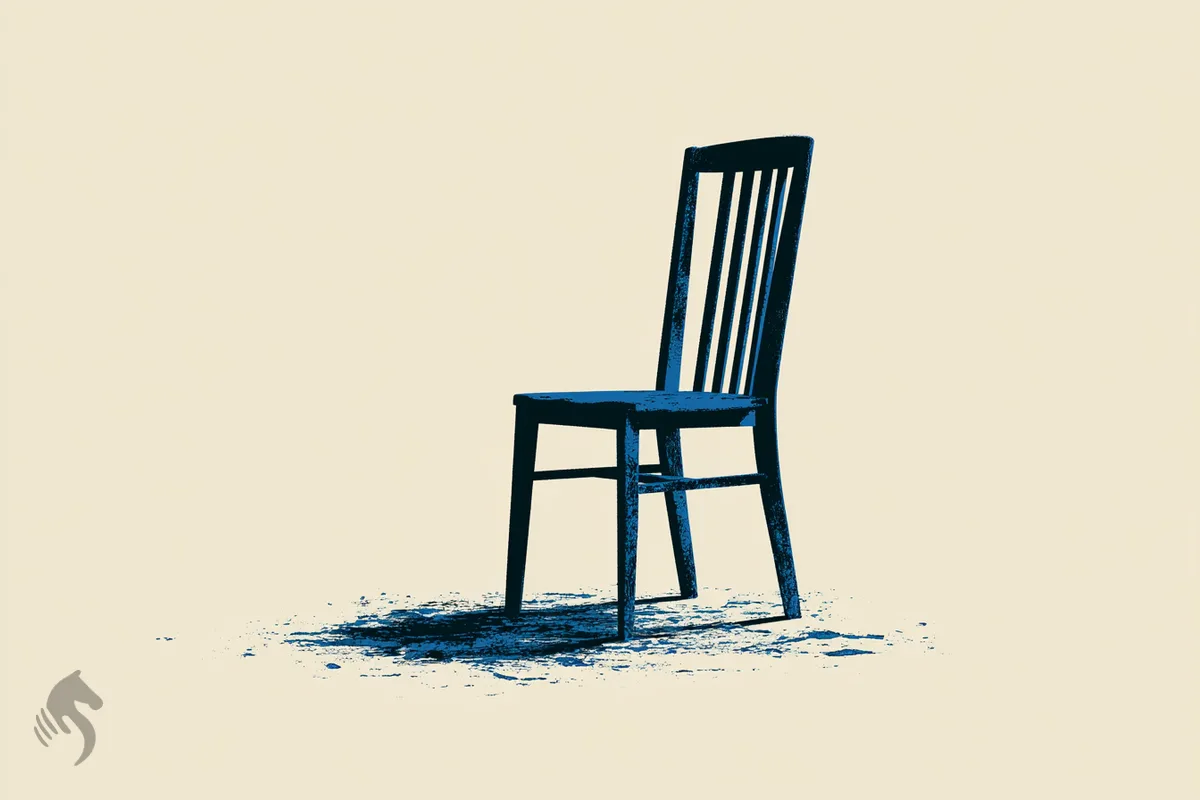
The game is over. You stayed seated, yet feel drained. Your heart may have sped up, your shoulders tensed, and you spent time holding variations in mind.
That feeling deserves to be taken seriously. It does not, however, tell you how many calories you burned. This is precisely where spectacular stories about chess often take a shortcut.
What researchers measure
Troubat, Fargeas-Gluck, Tulppo and Dugué (2009) follow 20 men playing against a computer program. They record measures including heart rate and respiratory gas exchange, used to estimate energy expenditure through indirect calorimetry.
Heart rate increases during play. Reported mean total energy expenditure is 138 kcal over the whole game, with values between 102 and 198 kcal. This total includes basal metabolism; these are not extra calories attributable solely to calculation. The authors find no significant variation in energy expenditure between the periods compared.
This protocol provides a measurement in a particular setting. It describes neither every player nor an entire day of a world championship. It therefore cannot be directly extrapolated to a week-long tournament.
Heart rate and calories: two different kinds of information
A heart-rate monitor primarily measures the rhythm of the heart. A calorie estimate calculated from that signal also depends on the model used. It should not automatically be treated as equivalent to a gas-exchange measurement.
You can therefore observe an increase in heart rate without being able to infer energy expenditure comparable to running. The presence of stress is not enough to validate any calorie figure.
The brain already uses energy at rest
Raichle and Gusnard (2002) note that the brain uses a substantial share of the body’s energy even at rest. Local changes associated with a task occur within that background activity. A feeling of intense effort does not imply an equivalent surge in its overall consumption.
The mistake would be to reason: I am exhausted after the game, so my brain must have used thousands of extra calories. Demonstrating such expenditure would require an appropriate measurement method and a clear statement of duration, conditions and the comparison baseline.
The 6,000-calorie figure
It is not established by the Troubat study. An unverified estimate cannot be rescued by subsequently explaining it through heart rate, cortisol or sleep. Those mechanisms do not replace measurement.
Likewise, a reported weight change during a competition does not isolate its cause: it does not, by itself, provide an energy balance or a measure of mental effort. Chess should not be presented as a weight-loss method.
Fatigue remains a real experience
Removing spectacular numbers does not make your experience imaginary. You may struggle to stay attentive, feel tense or want to leave the board. Note when it happens and what accompanies it: time remaining, a difficult position, a lack of breaks, discomfort.
This personal record does not measure a hormone. It can, however, help you organise the playing conditions within your control.
Preparing your body without an Elo promise
For your next tournament, consider the setup too: a suitable chair, equipment ready and a schedule that leaves room for recovery. Between games, you can change position and walk a little if that suits you.
You do not need to copy a champion’s fitness programme. The value of activity away from the board does not depend on a number of Elo points gained. Chess can play an important part in your life without replacing other forms of movement.
Further reading: managing the clock and tournament stress.
Put a clock beside each measurement
Picture a player travelling across town for a tournament. They walk briskly from the station, climb stairs to the playing hall, spend four hours at the board, analyse on their feet and make the return journey. At home a watch displays a daily total. An interview reports that total under a headline about the energy cost of chess. Which hours did the device include? Even if its estimate of the whole day were exact, the display alone could not tell you what fraction came from calculation at the board, what fraction came from walking and what fraction the body would have used during an ordinary day.
Make three entries on a sheet of paper: total for the entire day, total during the round and extra expenditure during the round compared with an appropriate reference activity. Each entry requires a different measurement. If an article gives a convincing estimate for the third, it has not necessarily measured the first two. Equally, putting a thermometer or a heart-rate monitor beside the board does not directly fill the extra-energy column. A device can measure its own signal accurately while leaving the quantity in the headline undetermined. The missing step is the relationship between the measured signal and the quantity the writer claims to know.
Try the arithmetic with made-up units rather than calories. Suppose an imaginary instrument counted twelve units during a particular interval and nine units during an equally long reference interval. The difference is three units. If you added all twelve to an existing daily estimate that already included the reference nine, you would count that background twice. If the intervals had different lengths, even the subtraction would require another step. These numbers are deliberately unrelated to real energy use. They illustrate a bookkeeping error that cannot be cured by choosing a more impressive tournament as the example.
A controlled comparison has a narrower job than a tournament diary
Troubat and colleagues studied twenty male chess players using measurements including heart rate and respiratory variables. This allows an investigation of physiological changes associated with the task in the people and conditions studied. It does not by itself establish the total daily energy needs of a child learning the moves, a grandmaster preparing for a match and a club volunteer setting up tables. Those are different populations and different intervals. The study is more interesting when read as an attempt to measure particular responses carefully than when treated as a machine that converts hours of chess into a universal calorie claim.
Ask what two conditions you would like to compare. Sitting quietly in a familiar room, sitting in competition with a clock running and standing at a demonstration board while talking are three distinct activities. If you want to know about mental pressure, make the comparison as similar as possible in posture and physical movement. If you want to describe the real demands of organising a whole tournament day, the journeys and time on your feet are part of the story. The choice of comparison changes what counts as relevant evidence. It also explains why two accurate descriptions of different tournament days might sound quite unlike one another.
Record what actually made the day difficult
A practical diary can begin with surprisingly mundane events. Where was the playing room? Were the pairings posted in another building? Did a late finish remove the time you had planned for a meal or a break? When did you have to make the longest series of difficult decisions? Put your sensations in a separate column from those events. “Felt worn out after the rook ending” records something real about your experience. It does not say how many calories the ending cost or establish why you felt that way. Keeping the columns separate makes it easier to choose an action that is genuinely available.
For example, if the tight connection to the hall is the recurring problem, changing the route or choosing an earlier departure gives you a result you can check directly. Did you arrive with time to settle at your board? If your practical problem is losing track of the finishing time during evening rounds, arrange your return journey with a late game in mind. The outcome to record is whether you had a workable journey home. Neither change requires you to estimate the brain's energy use from the score of a single game.
How to check a spectacular claim before passing it on
Look for the original unit and the original denominator. Is the number per person, per hour, per round or per day? Was it measured directly, estimated by an algorithm or repeated from an interview? Did it refer to a particular player under unusual conditions? If the report gives only a daily total, can you identify where the author's estimate of the chess component came from? If all you have is an observation that heart rate rose, write that narrower statement down. A correctly described physiological response can be interesting even when the proposed estimate of energy is unavailable.
Finally ask what would change your mind. A repeatable comparison with a specified reference activity would supply evidence relevant to the additional cost of play. A well-described series of whole-day observations would answer a different question about tournaments as lived events. A winning player's story might tell you how tiring that one match felt. Choosing the right source for the question lets you take fatigue seriously while keeping your account of the body grounded in what somebody actually measured.
As a quick check, underline every claim that still holds if the word calories is removed from the account. Arriving flustered, noticing a quicker pulse and struggling to sustain attention can all survive that edit. Each observation deserves the sort of measurement relevant to it.
Sources
- Troubat, N., Fargeas-Gluck, M.-A., Tulppo, M., & Dugué, B. (2009). The stress of chess players as a model to study the effects of psychological stimuli on physiological responses: an example of substrate oxidation and heart rate variability in man. European Journal of Applied Physiology, 105, 343–349. Article.
- Raichle, M. E., & Gusnard, D. A. (2002). Appraising the brain’s energy budget. PNAS, 99(16), 10237–10239. Article.

Comments