Chess and ADHD: Why the Chessboard Captures the Attention Everything Else Fails to Hold
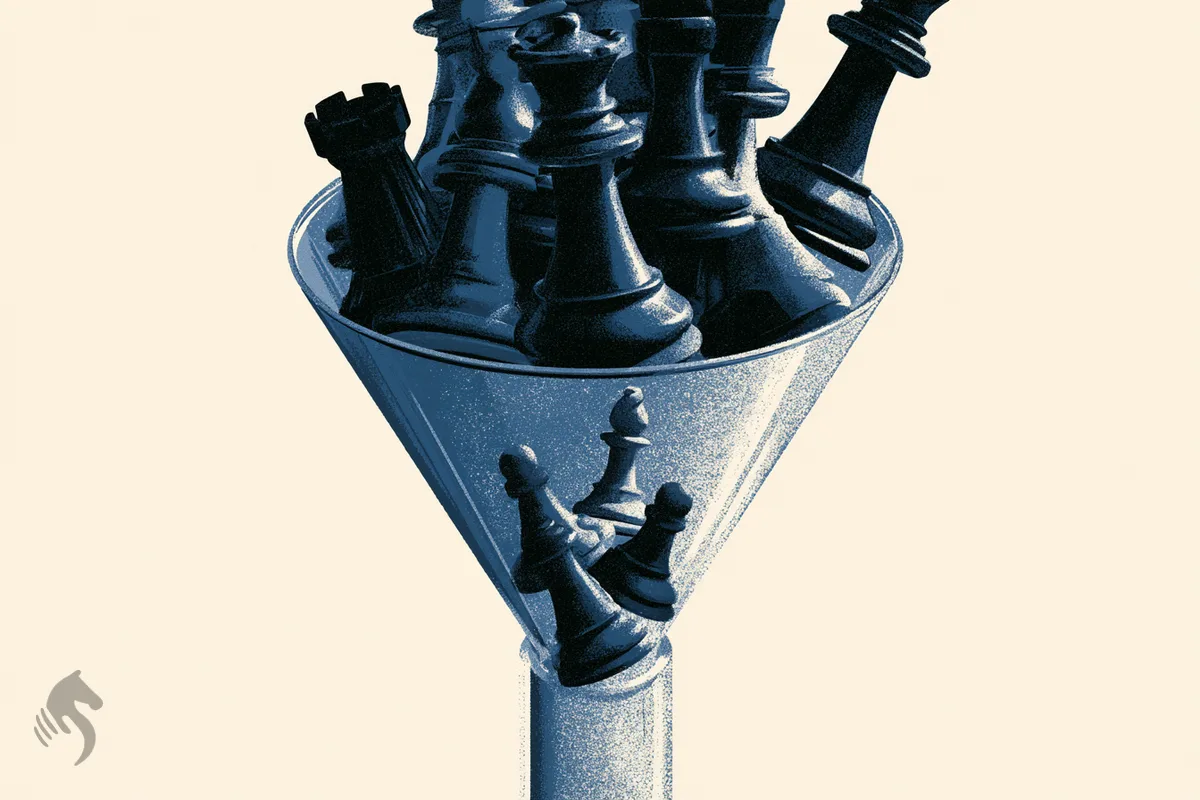
ADHD isn't an attention deficit - it's inconsistent attention. The chessboard creates the rare conditions where this brain naturally finds its anchor point.
Game science, competitive mindset, chess and society, personal analyses.
ADHD isn't an attention deficit - it's inconsistent attention. The chessboard creates the rare conditions where this brain naturally finds its anchor point.
Flipping the board, disconnecting, insulting your opponent. Anger in chess has a name: ragequit. And it has a precise neurological explanation that every player should understand.
Can we mathematically predict when an opponent will blunder? Bayesian networks offer a formal framework for estimating this probability from the clues available in the position.
Mirror neurons are at the heart of empathy and anticipation. In chess, they play a fascinating role: simulating the opponent's intentions. Here's what neuroscience reveals about this invisible mechanism.
Every player reasons in terms of possibilities and necessities: 'he can force mate,' 'I must defend this square.' This type of reasoning has a name in formal logic: modal logic. And it changes everything about how to think about a position.
Chess seems to be a game of order and pure logic. Yet chaos theory reveals that complex positions have real chaotic properties. A small error can have catastrophic consequences.
Working memory, chunks, openings, games forgotten or etched in mind: what cognitive psychology and neuroscience really say about chess and memory, and how to train so it counts.
Playing less to progress more: it sounds absurd, and yet cognitive recovery science explains why regular breaks are one of the most underestimated practices of the serious chess player.
Minimax is the fundamental algorithm of strategic reflection in chess. From modern engines to your own thinking at the board, here's how this mathematical tool structures every decision.
No articles match your search on this page.