
In 1795, physician Philippe Pinel, reformer of psychiatry in Paris, recommended chess to patients at the Salpêtrière as a structuring and stimulating activity. Two centuries later, psychiatrists and educators on four continents use the chessboard in very different therapeutic contexts: prisons, hospitals, refugee centers, programs for military veterans.
The intuition is as old as psychiatry itself. But what does contemporary research actually say about the mechanisms and measurable effects?
Therapeutic Mechanisms: What Is Plausible
Several mechanisms by which chess could have therapeutic effects are theoretically sound:
Cognitive Absorption and Interruption of Rumination
Rumination, mentally replaying negative events, imagining catastrophic scenarios, is a central mechanism in depression and anxiety. It consumes cognitive resources and perpetuates suffering.
A demanding chess game is one of the activities requiring the most cognitive absorption: analyzing a complex position leaves few available resources for ruminating. This is a mechanism of cognitive interruption similar to certain mindfulness techniques, not by emptying the mind, but by filling it with a well-defined task.
Sense of Competence and Mastery
Self-determination theory (Deci & Ryan, 1985) identifies the sense of competence as one of three fundamental psychological needs. People with depression often have a low perception of their efficacy, they feel they don't control their life.
Chess offers visible, objective progression. Solving a tactical problem you couldn't have solved two weeks ago is concrete proof of competence. Improving your Elo rating is a hard-to-deny indicator of progress. These objectifiable "victories" can progressively rebuild the sense of efficacy.
Structure and Predictability
For people living in chaotic or unpredictable environments (prison, refugee camp, domestic violence context), the chessboard offers a space where rules are absolute and equitable. The Knight always jumps in an L. The game result depends on the moves, not on external factors. This predictability can be profoundly reassuring.
Structured Social Connection
Many people in psychological difficulty have impoverished social relationships. The chessboard offers a social encounter format with a high level of structure: you know exactly what you're supposed to do (play), the required level of verbal intimacy is minimal, and the game itself provides a common language.
This structure can be particularly useful for people with social anxiety, stable-phase schizophrenia, or trauma aftermath that makes informal interactions difficult.
Data on Anxiety: The Marín Study
The most rigorous study on the effects of chess on childhood anxiety is by Marín et al. (2017).
Methodology: 170 Mexican children aged 8-12, randomly assigned to an intervention group (20 chess sessions, 1h/week) or a control group (usual activities). Anxiety measured by the STAI-C before and after.
Results: the chess group shows significant reduction in state anxiety and trait anxiety compared to the control group. The effect is moderate but robust.
Mechanism suggested by the authors: chess offers a learning environment where errors are valued (every defeat is analyzed), which reduces the fear of failure, a central component of childhood anxiety.
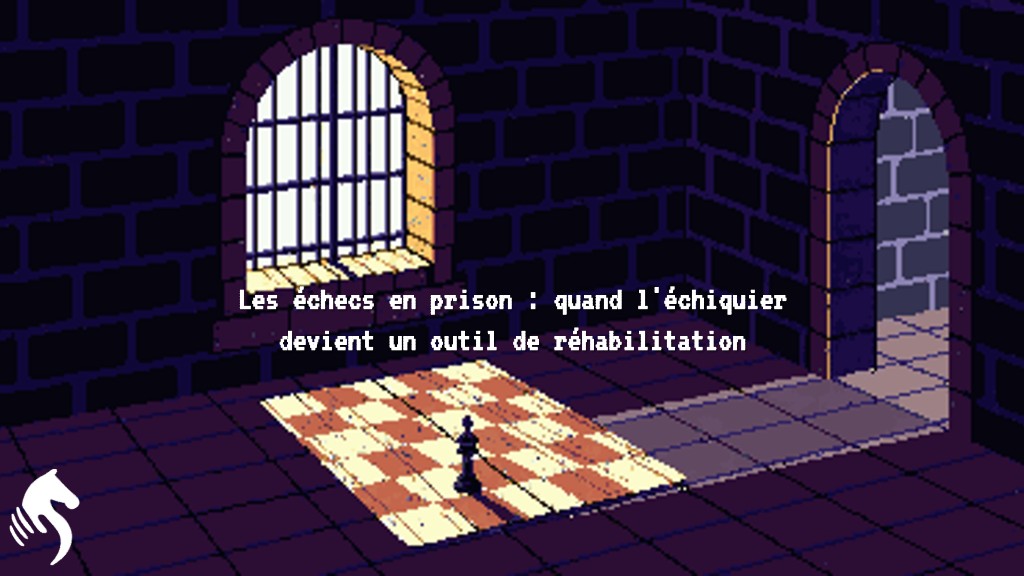
Prison Programs: Encouraging Results
The British "Chess in Prisons" Program
The Chess in Prisons program (UK), launched in 2014 and documented through annual reports until 2019, was implemented in several English correctional facilities. Reported data include:
- 20-30% reduction in disciplinary incidents in participating wings
- Improved in-custody behavior reported by guards
- Sustained engagement in the program by inmates (low dropout)
The program also notes indirectly observed but unmeasured effects: improved relationships between inmates (games create opportunities for respectful encounters), better frustration management, development of respect for rules.
The American Experience for Veterans
Several VA (Veterans Affairs) centers in the United States have integrated chess into their therapeutic activity programs for veterans, particularly those treated for PTSD or combat-related depression.
Informal reports indicate similar benefits: engagement in a structured activity, non-verbal social connection, sense of accomplishment. Chess doesn't treat PTSD, but it can complement validated therapies (EMDR, prolonged cognitive therapy) by offering a space for recovery and connection.
What Chess Cannot Do
An important note of caution: the documented benefits of chess in therapeutic contexts are real but limited.
Chess does not replace validated treatments. For clinical depression, generalized anxiety, PTSD, or any other psychiatric disorder, first-line treatments (cognitive-behavioral therapies, prescribed medications) remain essential. Chess can be a complement, never a replacement.
Context matters as much as the game. The benefits observed in prison programs or care centers don't come solely from the game: they also come from the supervision, the relationship with the instructor, and the group structure.
At-risk profiles must be identified. For people with strong performance anxiety, tournaments and competition can worsen suffering. Introduction of chess in therapeutic contexts must be accompanied by vigilance about the relationship to results and defeat.
Sources
- Marín, M. D., et al. (2017). Effects of chess instruction on academic and cognitive outcomes in school-age children. Journal of Educational Psychology Research.
- Deci, E. L., & Ryan, R. M. (1985). Intrinsic Motivation and Self-Determination in Human Behavior. Plenum Press.
- Chess in Prisons UK. (2019). Annual Report 2018-2019. Chess for Change Foundation.
- Pinel, P. (1801). Traité médico-philosophique sur l'aliénation mentale. Brosson.
Key Takeaways
- Chess reduces anxiety symptoms in children significantly in controlled studies (Marín et al., 2017)
- The primary mechanism: cognitive absorption interrupts ruminations and intrusive thoughts
- Prison programs show 20-30% reductions in disciplinary incidents (UK program)
- The chessboard offers a structured relational space: valuable for profiles with relational difficulties (depression, PTSD, ASD)
- Data on depression and PTSD are promising but still insufficiently documented by rigorous trials

Comments