
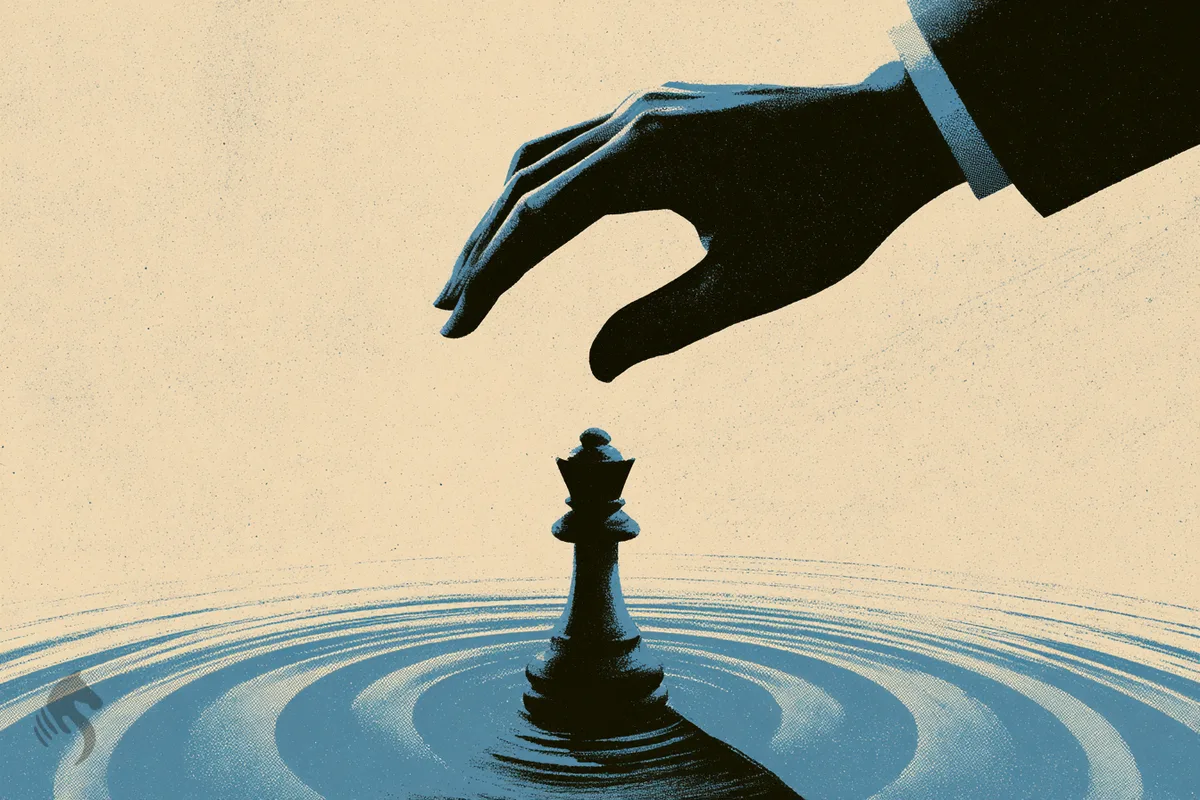
Your brain does not distinguish between a good chess combination and a pizza. In both cases, the same circuits activate, the same neurotransmitters flow, and the same "do it again" signal is sent. The difference lies in the nature and duration of the cognitive engagement that precedes the reward.
Understanding the neurochemistry of chess is not just an intellectual curiosity. It means understanding why some practices motivate over the long term while others exhaust, why online blitz can become compulsive when long games remain healthy, and how to structure your training in harmony with brain biology.
The Reward Circuit: An Introduction
The mesolimbic reward circuit is one of the most evolutionarily conserved neural circuits. It connects the ventral tegmental area (VTA), in the midbrain, to the nucleus accumbens, in the ventral striatum, with projections to the prefrontal cortex.
Its original function: signaling the presence of a biologically significant reward (food, mate) and motivating repetition of the behavior that led to it. But this circuit makes no qualitative distinction between reward types: it responds the same way to a carrot, a compliment, a financial gain, and the discovery of a mate in 4.
The central neurotransmitter of this circuit is dopamine. Contrary to popular belief, dopamine does not directly produce pleasure: it produces desire and motivation. This is the fundamental distinction established by Kent Berridge (University of Michigan) between "wanting" (dopaminergic desire) and "liking" (hedonic pleasure, more linked to endogenous opioids).
Schultz's Discovery: The Prediction Error
Neuroscientist Wolfram Schultz (Cambridge) conducted one of the most important experiments in reward neuroscience. In a 1997 study published in Science, he recorded the activity of dopaminergic neurons in monkeys exposed to fruit juice with or without prior signals.
Counterintuitive result: dopaminergic neurons do not fire at the moment of the reward (the juice), but at the moment of the signal that predicts it (the light). And when the expected reward doesn't arrive, there is an inhibition of dopaminergic neurons: a "less than expected" signal.
This concept of reward prediction error is fundamental for understanding chess. The brain constantly compares what it expected (based on its position evaluation) with what actually happens. Every move that exceeds expectations (an unforeseen combination that works, an opponent blunder) generates a dopamine spike. Every move below expectations generates inhibition.
This is why uncertainty is at the heart of chess engagement: a game that is too easy (where all predictions are correct) generates little dopamine. A balanced game, where the result remains uncertain to the end, generates a sustained and spread-out dopaminergic profile.
Key Moments of Dopamine Release
In chess, several specific moments correspond to documented peaks of dopaminergic activity (directly by analogy with fMRI studies on problem-solving):
Discovering the Combination
John Kounios (Drexel University) and Mark Beeman (Northwestern) studied the moment of insight (the "aha moment") in problem-solving. Their 2014 study in Psychological Science uses fMRI and EEG to show that at the moment the solution emerges, there is a burst of gamma activity in the right temporal cortex, immediately followed by reward circuit activation.
That moment: suddenly recognizing that your rook on b7 forces a mate in 3 that the opponent cannot avoid: has exactly this profile. It is an insight, and insights activate the reward circuit.
The Opponent's Blunder
A mistake by the opponent that you predicted generates a stronger dopamine spike than a good move of your own. Why? Because the prediction error is larger in the positive unexpected: you didn't expect things to go that well. The anticipation was "difficult position" and the result is "winning position": the difference is massive.
This phenomenon explains a frequent behavioral bias in chess: players often underestimate positions after an opponent's blunder: they continue playing with too much confidence, carried by dopaminergic euphoria, and make errors in turn.
Elo Progression
The Elo rating is a delayed but powerful source of dopaminergic reward. Every point gained is a micro-reward. Every passage of a symbolic threshold (1500, 1700, 2000) is a stronger reward.
This system of visible, quantified progression is one of the most effective mechanisms for maintaining long-term engagement, and also one of the most risky for profiles susceptible to behavioral dependence.
Comparison with Other Games: Chess's Specific Profile
To understand where chess sits in the neurochemical landscape, a comparison is useful:
Games of chance (roulette, slot machines). Maximum dopaminergic profile for uncertainty: the reward is unpredictable and variable. But: no learning possible, no real progression. Dopamine spins empty without cognitive enrichment.
Progression video games. Similar profile to chess for visible progression, with shorter and more frequent reward loops (short missions, XP, loot). Less cognitive load but more addictive engagement.
Go. Very similar profile to chess: same complexity, same uncertainty, same progression. Studies on Go (particularly numerous in Japan and Korea) show comparable cognitive effects.
Online blitz vs. classical game. The most important distinction for chess players. Blitz (1-5 minutes) has a faster and more intense dopaminergic profile: feedback in minutes, Elo immediately recalculated, next game accessible in one click. The classical game has a more spread-out and deep profile: engagement lasts hours, the reward is delayed, tension accumulates progressively.
From a neurochemical standpoint, chronic blitz more closely resembles compulsive reward-seeking behavior; classical games resemble healthy cognitive engagement with a modulated reward system.
Cortisol, Adrenaline, and the Chemistry of the Tense Game
Dopamine is not the only active molecule during a chess game.
In difficult positions (especially in a tournament with stakes), the sympathetic system (adrenaline) and the HPA axis (cortisol) activate. Adrenaline increases vigilance and speeds up information processing. Cortisol mobilizes energy to face the perceived threat.
In moderate doses, this activation improves performance: this is the Yerkes-Dodson law (1908): optimal performance at an intermediate level of arousal, degradation at both extremes (too little arousal = boredom and inattention; too much arousal = paralyzing stress).
In excessive doses, cortisol inhibits the prefrontal cortex: precisely the region responsible for planning, calculation, and inhibiting bad responses. An overly stressed player plays more impulsively, calculates less deeply, and is more prone to blunders.
High-level players have particular neurochemical profiles in tournaments: their cortisol rises less than amateurs' and comes back down faster after the game. This stress regulation is partly innate, partly trainable: that is the entire purpose of mental preparation.
Serotonin and Social Status: The Board as Arena
Serotonin is involved in regulating social status and sense of personal worth. Studies on primates show that dominant individuals have higher serotonin levels, and that changes in social rank modify serotonin levels.
In chess, the Elo rating is an extremely precise and visible proxy for social status. A victory against a higher-rated player increases not only dopamine (reward) but also probably serotonin (enhanced sense of status). A loss against a lower-rated player produces the opposite effect.
This is why losses against "inferior" opponents are often experienced more intensely than losses against "superior" ones: they involve a threat to perceived status.
Using Neurochemistry to Progress
Understanding these mechanisms allows you to structure training more intelligently:
End on a success. The reward circuit is sensitive to the last event in a session. Ending a tactical session on a solved problem (even an easy one) positively conditions the circuit and increases the likelihood of returning to train.
Vary to avoid habituation. Repeated exposure to the same type of stimulus reduces the dopaminergic response (habituation). Alternating between endgames, openings, tactical puzzles, and long games keeps the circuit fresh.
Space out blitz. If you play online blitz, consider limited sessions (30-45 minutes maximum) with at least 24-hour breaks. Permanent availability and ultra-fast feedback are exactly the conditions for documented compulsive engagement in online gaming studies.
Celebrate intermediate progress. Replaying a game where you played a difficult endgame well activates the reward circuit and reinforces the memory of that behavior. Athletes use "success review" as a deliberate positive conditioning tool.
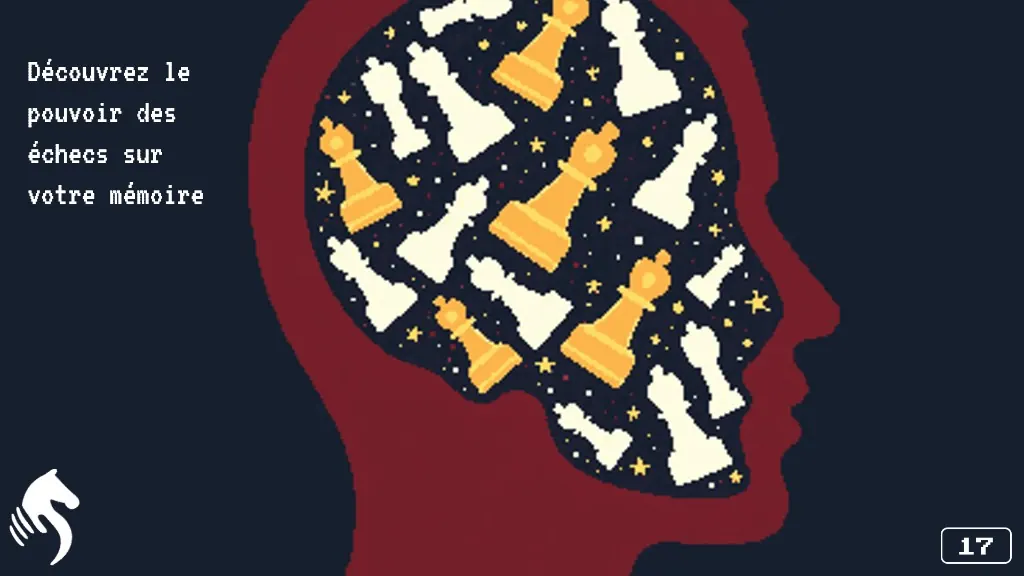
How Dopamine Shapes Chess Learning and Memory
The relationship between dopamine and chess learning goes far deeper than simple motivation. Dopamine is the brain's primary learning signal: it tells the brain which cognitive patterns are worth encoding into long-term memory. In chess, this makes dopamine central not just to enjoying the game but to actually improving at it.
Dopaminergic Reinforcement of Chess Patterns
Every chess player has experienced the way certain positions "stick" in memory. You see a knight fork, you miss it in the game, and you never forget that pattern again. The emotional charge of the mistake is not incidental: it is dopaminergic. The negative prediction error (you expected to hold the position, you lost material) generates a dopamine dip that flags the pattern as highly important. The brain says, in effect: this is a game situation you must remember.
Neuroscientist Wolfram Schultz's work on dopamine and prediction error established that dopamine neurons respond specifically to outcomes that differ from expectations. In chess, every position that unfolds differently than anticipated generates a dopamine signal. This means chess is neurologically ideal for learning through pattern recognition: the constant stream of surprising moves, unexpected counterplay, and suddenly-revealed tactical motifs keeps the dopaminergic learning signal active throughout a game.
Research on dopaminergic reinforcement learning in complex cognitive tasks consistently shows that high-uncertainty environments generate stronger long-term memory encoding than low-uncertainty ones. Chess provides that uncertainty structurally: even a deeply analyzed opening can produce unexpected positions by move 10. This sustained cognitive novelty is why chess players often remember game positions from years ago with striking clarity.
Working Memory, Calculation, and the Dopamine-Prefrontal Link
Dopamine is not only active in the reward circuit. It plays a critical role in working memory function through its action on the prefrontal cortex, specifically D1 receptors in the dorsolateral prefrontal cortex (dlPFC). Working memory is the cognitive function that holds information active during reasoning: in chess, this means holding the current position, candidate moves, and their consequences simultaneously in mind during calculation.
Research from Arnsten and colleagues (Yale University) established that moderate dopamine activity in the prefrontal cortex optimizes working memory performance. Too little dopamine (fatigue, low motivation states) degrades working memory. Too much dopamine, as under acute stress, also degrades it. The optimal dopamine level for chess calculation sits at moderate arousal: the state chess players sometimes call "focused alertness."
This explains a well-known chess phenomenon: players often calculate better in the opening and middlegame than in severe time pressure. As the game progresses and stress hormones rise, dopamine balance in the prefrontal cortex shifts away from the optimal zone, reducing working memory capacity and making calculation errors more likely. The brain becomes reactive rather than planful.
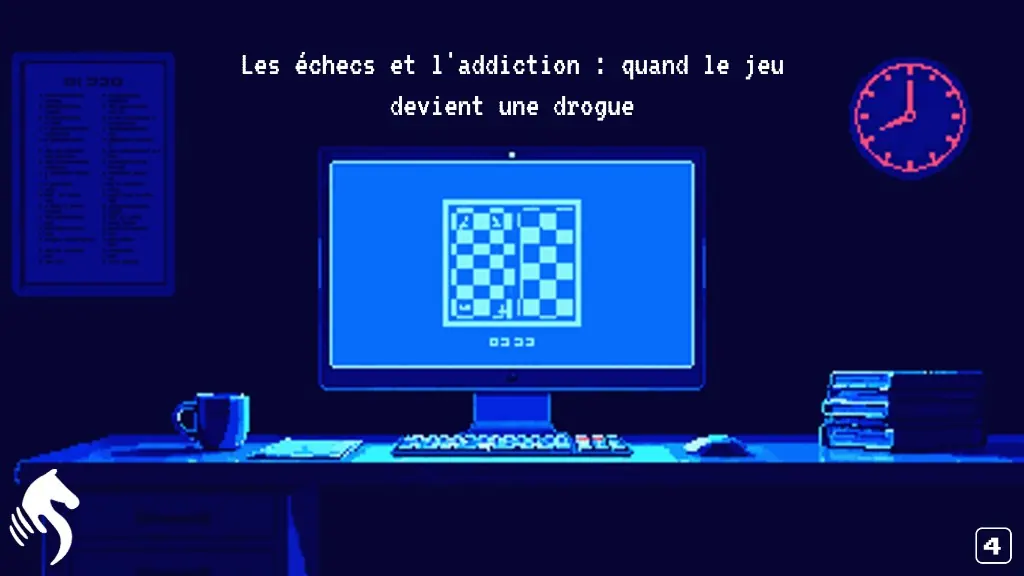
Dopamine and Chess Addiction: Recognizing and Managing Compulsive Play
Chess can become compulsive. Not in the way that is often romanticized ("passion," "obsession"), but in a neurochemically specific way that shares features with documented behavioral addictions. Understanding the dopaminergic mechanisms involved is the first step toward healthier practice.
The Four Elements of Chess's Addictive Potential
Behavioral addiction researchers have identified core features that make activities high-risk for compulsive engagement: variable reward schedules, rapid feedback, social comparison, and easy availability. Online chess, and especially online blitz, checks all four boxes.
Variable reward schedule. You do not know if you will win the next game. Variable rewards (sometimes you win, sometimes you lose, unpredictably) generate stronger dopaminergic drive than predictable rewards. This is the same mechanism exploited by slot machines. Chess is not designed to be addictive in this way, but the uncertainty inherent to the game produces the same neurochemical dynamic.
Rapid feedback. Online blitz games last three to five minutes. The dopamine loop from anticipation to outcome to the start of the next game takes five to seven minutes total. This is fast enough that the brain's wanting system stays continuously activated: each completed game immediately generates anticipation for the next.
Social comparison via Elo. The Elo rating is a continuous, quantified, public measurement of competitive standing. Dopamine and serotonin are both activated by social rank changes. Every Elo point gained or lost triggers neurochemical responses. The constant visibility of this number creates ongoing incentive to play "just one more game" to recover lost points or extend a good run.
24/7 availability. Online chess platforms never close. The behavioral addiction literature consistently identifies availability as a critical risk amplifier: when an activity that generates dopaminergic reward is available at all hours with no friction to start, the brain's wanting system can sustain engagement beyond what would be healthy with natural limits.
Signs That Chess Play Has Become Problematic
Most chess players play in a healthy, self-regulated way. But the game's neurochemical profile makes compulsive engagement possible, particularly for players predisposed to reward-seeking behavior. Useful signals to watch for:
Playing to recover from a loss rather than from genuine desire to play ("rage queue"). Skipping sleep, meals, or obligations for chess. Feeling irritable or anxious when unable to play. Using chess to avoid emotional discomfort rather than as a genuine activity. Noticing that Elo obsession has replaced enjoyment of the game itself.
These patterns reflect a dopaminergic reward system that has partially decoupled from the higher-level motivations (learning, competition, beauty) that make chess genuinely valuable. The game has become a mechanism for delivering dopamine rather than an end in itself.
Practical Strategies for Healthy Dopamine Management
Managing dopamine in chess practice is not about playing less: it is about playing in ways that keep the reward system calibrated.
Time-box online blitz. Set a session limit of 30-45 minutes for blitz play, and honor it regardless of your current score. The brain's wanting system is poorest at self-regulating when it is already engaged; the limit must be pre-committed.
Separate analysis from rating games. Daily tactics puzzles and game analysis generate their own dopaminergic reward (insight moments, pattern recognition) without the social comparison element of rated play. This creates a healthier dopamine balance in your practice.
Track mood, not just Elo. After each session, briefly note your mood state. If you consistently feel worse after playing than before starting, the dopaminergic circuit has inverted: the game is now delivering net negative affect. This is a clear signal to change the format, volume, or context of play.
Use longer time controls deliberately. Classical games and rapid games have a different dopaminergic profile than blitz: slower feedback, deeper engagement, less compulsive loop. Incorporating longer games into your practice diet changes the neurochemical experience of chess toward the healthier end of the spectrum.
The Science of Chess Motivation: Using Your Brain's Reward System
Understanding dopamine does not only help you avoid problems. It also explains how to structure chess training for maximum motivational sustainability.
Intrinsic Motivation and Dopaminergic Sustainability
Motivational psychology distinguishes between intrinsic motivation (doing something for its inherent satisfaction) and extrinsic motivation (doing it for external reward). Research consistently shows that intrinsic motivation is more sustainable over years. It is also more dopaminergically stable: the brain does not habituate to genuine curiosity and mastery the same way it habituates to external rewards.
In chess, intrinsic motivation means engaging with positions because they are genuinely interesting, studying endgames because you want to understand the game more deeply, and playing opponents because competition itself is engaging. This kind of motivation generates dopamine through cognitive engagement rather than through outcome uncertainty.
Extrinsic motivation in chess looks like playing only for Elo, studying openings only because they "win more games," and measuring all progress by tournament results. This dopaminergic profile is more intense in the short term but more prone to exhaustion and disillusionment.
The most sustainably motivated chess players typically shift over time from primarily extrinsic toward primarily intrinsic motivation. They stop playing to "get to 1800" and start playing because the game itself is a source of genuine pleasure and intellectual satisfaction. This is not a personality difference but a dopaminergic one: the brain's reward system has learned to find richness in the game rather than only in outcomes.
Structuring Sessions for Dopaminergic Optimum
Practical training structure informed by neuroscience:
The 25-minute work block. Sustained focus on chess analysis or tactics exhausts working memory and prefrontal dopamine availability. After 20-30 minutes of intense calculation or study, a 5-10 minute break restores dopamine tone and working memory capacity. This is not laziness: it is neurochemically efficient chess study.
Alternating difficulty levels. Solving tactical problems that are slightly too hard for you generates dopamine through struggle and breakthrough. Solving problems that are too easy quickly generates habituation and boredom. The ideal training session alternates between positions at your current level (building confidence), positions slightly above (generating breakthrough dopamine), and occasional review of mastered patterns (consolidating memory).
The success ending. End each training session on a success. Solve one problem you know you can solve. Play out an endgame technique you have mastered. The brain's reward circuit is particularly sensitive to the most recent experience in a sequence: ending on success positively conditions return to practice.
Weekly variation. Spend different days on different aspects of chess: tactics, opening preparation, endgame study, game analysis, and actual games. This variety prevents habituation in any single area and keeps the dopamine novelty signal active across the full range of chess skills.
Chess, Flow, and Peak Dopamine States
Positive psychology researcher Mihaly Csikszentmihalyi identified "flow" as the optimal experience of complete absorption in a challenging activity. Flow is neurochemically associated with sustained dopaminergic and serotonergic activity, reduced activity in the default mode network (the mind-wandering brain), and peak prefrontal function.
Chess is one of the human activities most commonly associated with flow states, precisely because its structure naturally generates the conditions Csikszentmihalyi identified as necessary: clear goals (win the game), immediate feedback (the position is better or worse after each move), and challenge balanced to skill level (a well-matched opponent is neither too easy nor too hard).
When a chess player enters flow, time seems to collapse, calculation becomes effortless, and the game occupies all available attention. This state is neurochemically different from ordinary play: it represents peak dopaminergic tone in both reward and prefrontal circuits simultaneously. It is also the state in which the deepest chess learning occurs: the brain is fully engaged, prediction errors are generating maximum learning signals, and the experience encodes into long-term memory with particular strength.
Chasing flow artificially does not work: it emerges from genuine skill-challenge balance, not from trying to feel absorbed. But you can create conditions that make flow more likely: well-matched opponents, sufficient time to think, positions with genuine complexity, and the kind of intrinsic motivation that comes from loving the game for its own sake.
Sources
- Schultz, W., Dayan, P., & Montague, P. R. (1997). A neural substrate of prediction and reward. Science, 275(5306), 1593-1599.
- Berridge, K. C., & Robinson, T. E. (1998). What is the role of dopamine in reward: Hedonic impact, reward learning, or incentive salience? Brain Research Reviews, 28(3), 309-369.
- Kounios, J., & Beeman, M. (2014). The cognitive neuroscience of insight. Annual Review of Psychology, 65, 71-93.
- Yerkes, R. M., & Dodson, J. D. (1908). The relation of strength of stimulus to rapidity of habit-formation. Journal of Comparative Neurology and Psychology, 18(5), 459-482.
- Sapolsky, R. M. (2017). Behave: The Biology of Humans at Our Best and Worst. Penguin Press.
- Kuss, D. J., & Griffiths, M. D. (2012). Internet gaming addiction: A systematic review of empirical research. International Journal of Mental Health and Addiction, 10(2), 278-296.
Key Takeaways
- Dopamine codes anticipation and prediction error, not pleasure itself: it is uncertainty that triggers the release
- The chessboard activates the mesolimbic circuit (VTA → nucleus accumbens) similarly to other engaging games, with a more complex and durable profile
- The "eureka moment" of finding a combination produces a measurable dopamine spike in fMRI
- Unexpected opponent blunders generate more dopamine than predictable moves: the unexpected wins
- Online blitz combines maximum engagement factors: fast feedback, visible Elo, variability, 24/7 availability

Comments