

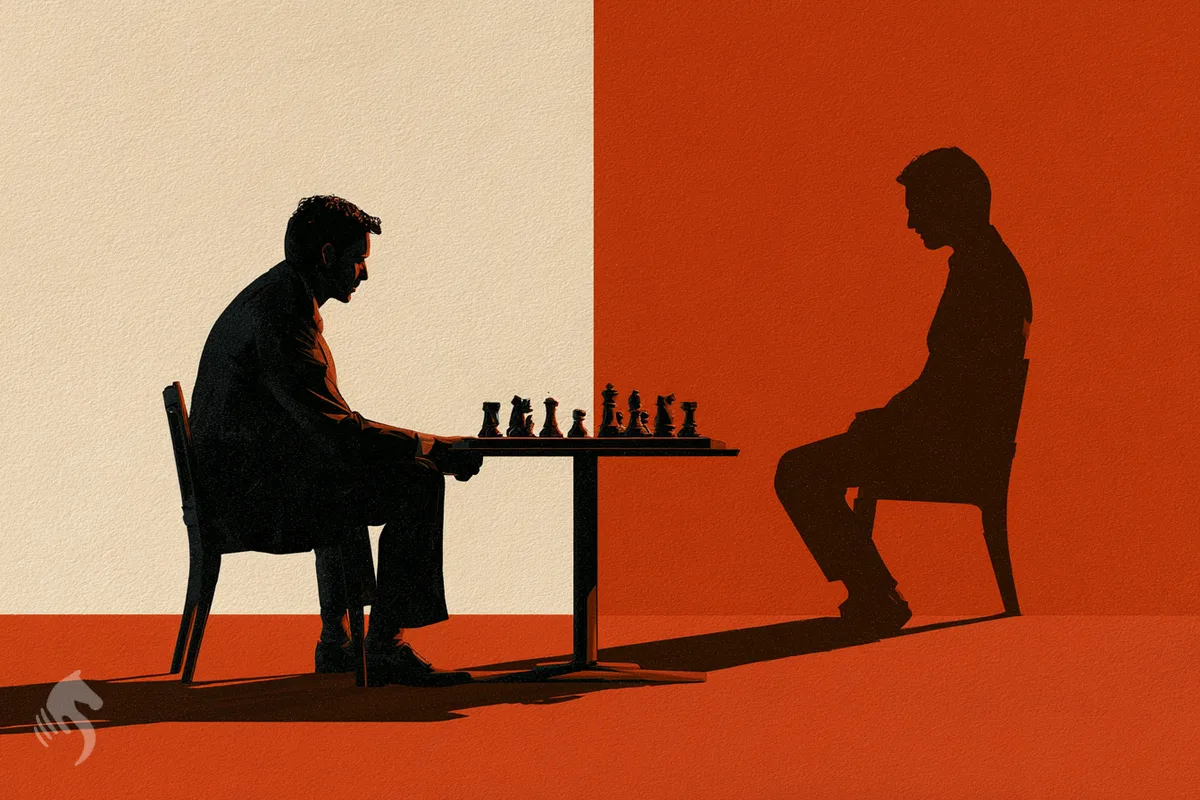
You've just lost three games in a row. You know it, you know exactly what it means, you've even read articles about it.
You click "new game."
That's the puzzle this article is trying to handle. It isn't a knowledge gap: you have all the information you need. It's a gap in the use of that information at the precise moment it would help.
Which is exactly what the concept of emotional intelligence claims to name. Whether that concept is worth anything is another matter.
The Original Idea
In 1990, two American psychologists, Peter Salovey and John Mayer, published a paper in an obscure journal titled simply "Emotional Intelligence."
Their proposal is measured. They describe a set of distinct abilities, organized into four branches:
- Perceiving emotions, in yourself and in others.
- Using emotions to facilitate thought.
- Understanding emotions, their causes and their sequences.
- Regulating emotions.
Put that way, it's reasonable, testable, and modest. These are abilities, presented as such, and it remains to be established that they form a coherent whole and that they predict anything.
Then Came the Book
In 1995, science journalist Daniel Goleman published Emotional Intelligence. The book sold millions of copies and cemented the idea that this factor mattered as much as IQ for professional, social, and personal success.
The problem is the timeline.
In 1995, Mayer and Salovey were still asking themselves whether their concept was scientifically valid and whether their measurement instruments were reliable. They had published no study establishing a correlation between emotional intelligence and anything at all. That work only really got going in the late 1990s.
In 2008, speaking to the American Psychological Association, Salovey called Goleman's claims outrageous, noting that no data supported them at the time they were made.
It's a rare and instructive situation: the inventor of a concept publicly denouncing its famous version. And almost nobody knows about it, because the famous version is the one in circulation.
The Honest Question: Does It Exist?
Now look at what thirty years of work has produced, and the picture isn't flattering.
Three concepts under one name
First problem, and it's structural. What gets called emotional intelligence covers at least three different things, which meta-analyses have established as distinct.
Ability emotional intelligence is measured through performance tests, with answers judged more or less correct. Trait emotional intelligence is measured by self-report questionnaire: you're asked whether you understand your emotions well. Mixed emotional intelligence blends the two with personality traits and social competencies.
These three measures correlate only weakly with each other. So they aren't measuring the same thing, while carrying the same name, which is enough to explain a good chunk of the field's confusion.
The incremental validity problem
Second problem, and it's the decisive one.
The right question isn't "does emotional intelligence predict performance," it's "does it predict something we couldn't already predict". Because if its contribution is already explained by general intelligence and standard personality traits, then the concept adds nothing: it renames.
That's the core of the criticism raised by John Antonakis, Edwin Locke, and Frank Landy among others. In their view, the advertised predictive validity is confounded with personality for self-report measures, and with intelligence for ability measures.
The meta-analyses largely back them up. For ability emotional intelligence, incremental validity on job performance, beyond the big five personality traits and general intelligence, is weak to nonexistent. Mixed measures predict better, but they already include personality traits, which makes the result hard to read as anything other than redundancy.
And a third problem piles on for self-report questionnaires, one familiar to readers of this series: they ask people to rate a skill whose absence is precisely what prevents them from rating it. That's the exact structure of the effect described in our article on the Dunning-Kruger effect in chess.
What's Left, and Why It Concerns Chess
So should you throw the concept out? As a grand general capacity governing success, yes, there isn't much to salvage.
But look at the first branch of the original model, Salovey and Mayer's: perceiving your own emotional state.
Taken on its own, that isn't a theory of success. It's a factual, narrow, checkable question: at a given moment, do you know what state you're in? And that question matters enormously in chess, for a specific reason.
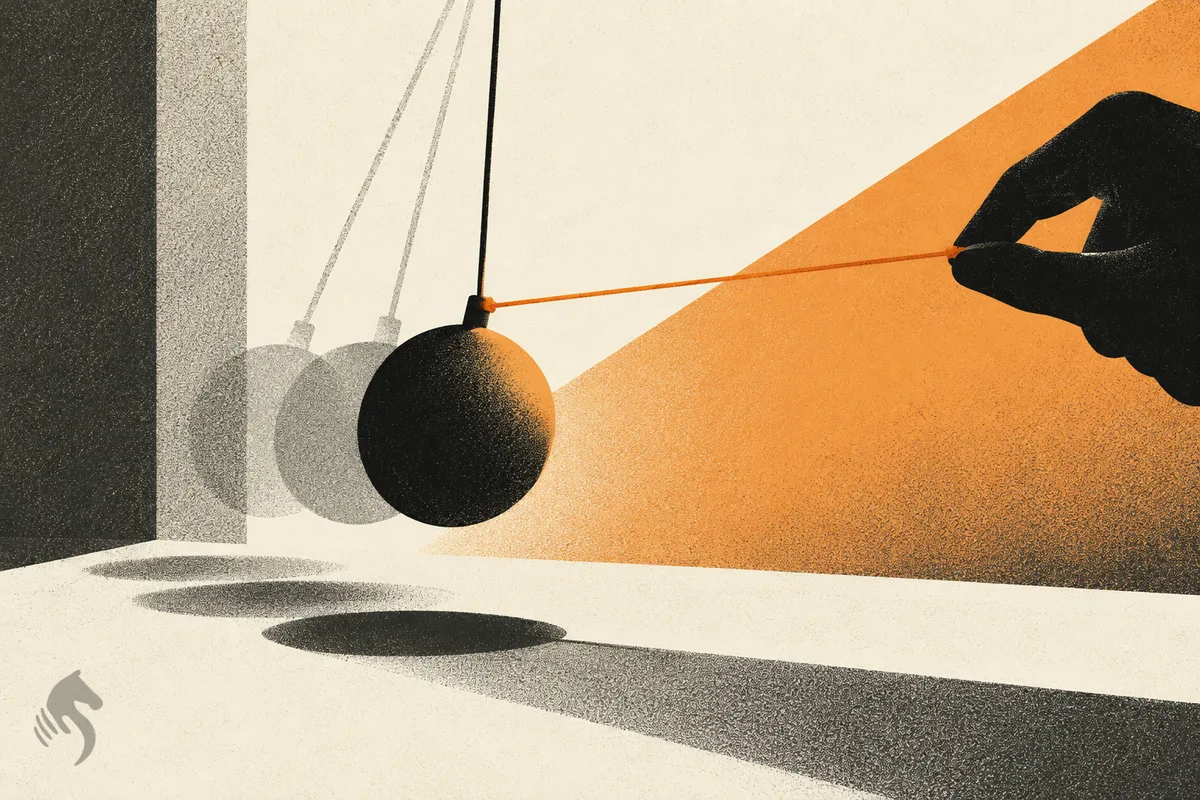
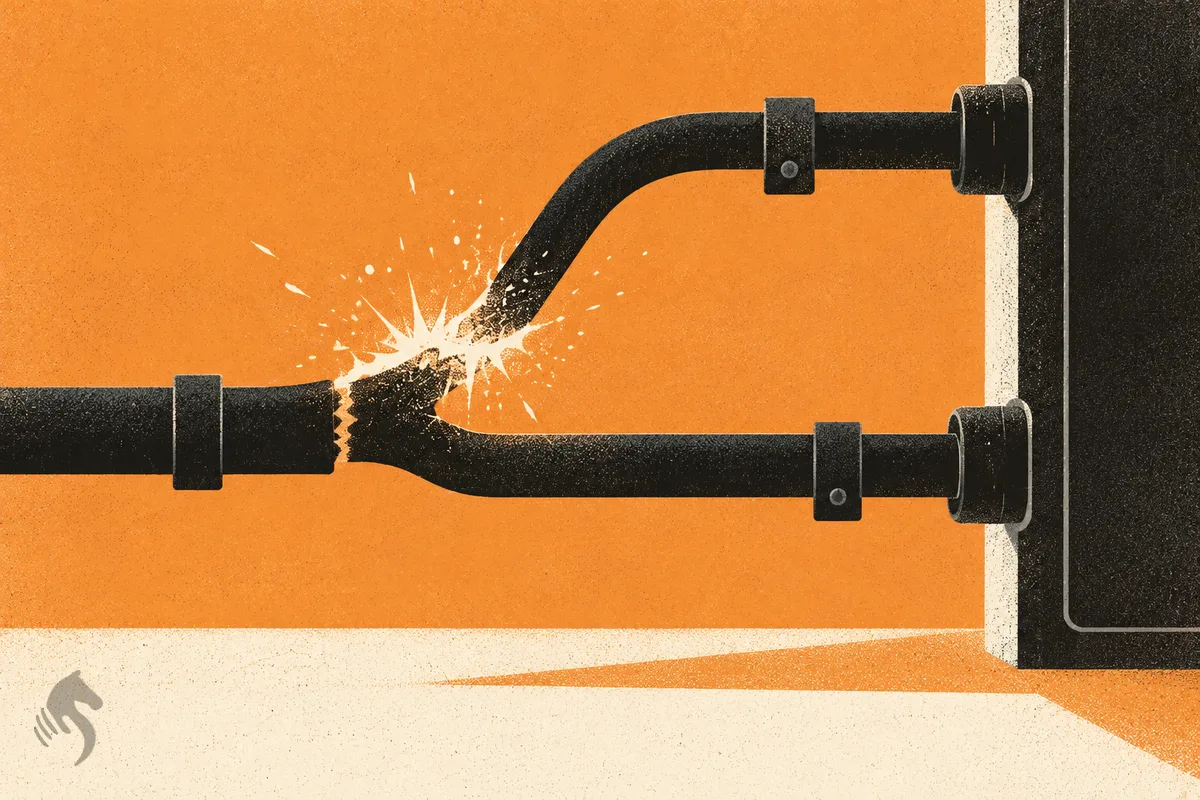
Tilt isn't dangerous because it makes you sad. It's dangerous because it degrades the quality of your decisions while degrading your ability to notice that they're degraded. Both deteriorations arrive together. That's what makes "stop playing when you're on tilt" simultaneously obviously correct and practically unusable: at the moment you'd need to apply it, the measuring instrument is broken.
Our article on chess and anger describes the neurological circuit involved. Here the question is different: how do you know you're in it.
The Advantage Chess Has
Here's the point that justifies this article, and it flips the problem completely.
In most areas of life, assessing your emotional state is only possible through introspection. That's why questionnaires were built, and it's why they're so bad.
In chess, you don't need introspection. You have data.
Your emotional state leaves objective, timestamped, consultable traces that exist whether you look at them or not:
Time per move. Tilt shows up here first. Your average thinking time collapses. You play moves in two seconds in positions that deserve thirty. That number is in the game data.
The gap between games. A game started twelve seconds after the previous one ended isn't a decision, it's a reaction. The length of that gap is an excellent indicator, and it's recorded.
The streak. Three consecutive losses is a fact, not an impression.
The error profile. Tilt doesn't produce subtle strategic errors, it produces crude ones: pieces hanging, non-forced moves played fast.
The time of day. Your statistics by hour probably say something you'd rather not know.
None of these measures runs through your judgment. That's the whole point: they work when your judgment stops working.
Put differently, where psychology spent thirty years trying to build a reliable instrument for measuring the perception of one's own state, chess hands you one for free, and it's more reliable than every questionnaire in the field.
The Protocol
Everything that follows rests on a single principle: don't try to know yourself better, try not to depend on knowing yourself.
1. Set numerical thresholds while calm
Write your rules now, while you're calm, and make sure they require no assessment of your state.
For instance: after two consecutive losses, I stop. Or: if my average time per move drops below a certain threshold, I stop. Or: never more than three games in a row.
The criterion has to be verifiable without judging yourself. "I stop when I feel myself tilting" is exactly the rule that cannot work, since feeling is the first thing the state degrades.
2. Put a physical obstacle in the way
A rule that demands willpower at the critical moment isn't a rule. Close the tab, put the phone in another room, turn off the screen. A ten-second physical obstacle is often enough, because it turns an impulse into a decision.
3. Check your beliefs against the data
You probably hold convictions about how you work: "I play better in the evening," "I bounce back fast from a loss," "blitz doesn't get to me." These are hypotheses. Your platform's statistics test them in three minutes.
That's the best possible exercise in the spirit of this article: replacing an intuition about yourself with a measurement of yourself.
4. The one-line log
After each session, one line: how many games, what result, how you felt when you started. After fifty lines, you have your own regularities, and they don't look like the ones you'd have guessed.
That's the useful version of "self-awareness," and you get it by writing, not by meditating.
What to Take Away
Emotional intelligence as it circulates in self-help books rests on a popularization that one of its own inventors publicly disowned. As a grand general capacity predicting success, it doesn't survive the incremental validity question: what it predicts is already predicted by intelligence and personality.
What's left, and what's real, sits in the first branch of the original model: knowing what state you're in. That's a narrow question, and it's crucial in chess, because the state that degrades your decisions simultaneously degrades your ability to notice it.
The good news is that you don't have to solve that problem through introspection. Your time per move, your gap between games, and your current streak are objective measures of your state, available for free, and reliable at the exact moment you aren't.
After reading: open your statistics and look at your win rate on the third consecutive game, then on the fourth. The number you find is your stopping rule, and you never had to ask yourself how you feel.
This article is part of a series on psychology applied to chess. See also the Dunning-Kruger effect in chess, chess and anger, and habit formation in chess.
Sources
- Salovey, P., & Mayer, J. D. (1990). Emotional intelligence. Imagination, Cognition and Personality, 9(3), 185-211.
- Goleman, D. (1995). Emotional Intelligence: Why It Can Matter More Than IQ. Bantam Books.
- Locke, E. A. (2005). Why emotional intelligence is an invalid concept. Journal of Organizational Behavior, 26(4), 425-431.
- Landy, F. J. (2005). Some historical and scientific issues related to research on emotional intelligence. Journal of Organizational Behavior, 26(4), 411-424.
- Joseph, D. L., & Newman, D. A. (2010). Emotional intelligence: An integrative meta-analysis and cascading model. Journal of Applied Psychology, 95(1), 54-78.
- O'Boyle, E. H., Humphrey, R. H., Pollack, J. M., Hawver, T. H., & Story, P. A. (2011). The relation between emotional intelligence and job performance: A meta-analysis. Journal of Organizational Behavior, 32(5), 788-818.



Comments