
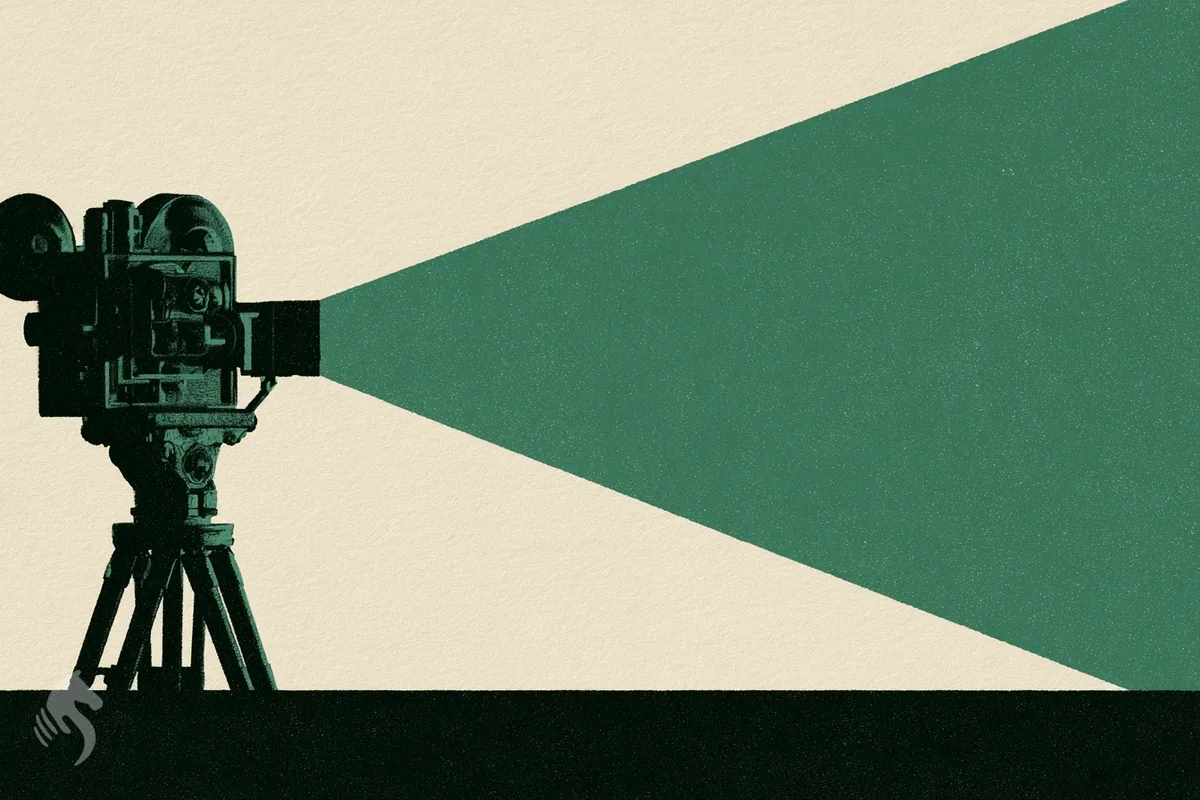
On October 23, 2020, Netflix released the first episode of The Queen's Gambit. The next day, Chess.com recorded its biggest daily registration peak in history. Sales of physical chess sets increased by 87% in the United States within a month. Mothers watching the series signed up online after the final episode.
This isn't an ordinary phenomenon. It's the demonstration of something sociologists have studied for decades: the power of a cultural representation to transform an actual practice.
The Board as Narrative Shortcut
Before understanding The Queen's Gambit, you must understand what Hollywood had done with chess for sixty years.
Chess is, for the rushed screenwriter, a formidable narrative signaling tool. Showing a character playing chess instantly communicates, without dialogue: this character is intelligent. A strategist. Probably a bit dangerous. Often asocial.
James Bond faces a chess opponent in From Russia with Love (1963). HAL 9000, the murderous AI of 2001: A Space Odyssey, beats Poole at chess before killing him. Hannibal Lecter plays alone in his cell in The Silence of the Lambs. In Marvel comics, Doctor Strange and countless super-geniuses have a chessboard in their lair.
This association (chess = cold intelligence, potentially threatening) isn't accidental. It reflects a cultural imaginary built on two pillars: the asocial genius and the metaphor of manipulation (the board as a space where one moves others like pieces).
Ingmar Bergman, in The Seventh Seal (1957), pushes the metaphor to its extreme: the medieval knight challenges Death over the chess board to delay the end. The board becomes the place of existential negotiation.
Stefan Zweig and Chess Literature
Literature has explored chess with more nuance than popular cinema.
The Royal Game (1942) by Stefan Zweig is perhaps the greatest novella ever written on the subject. Published posthumously (Zweig committed suicide the month before its publication), it tells the story of an Austrian doctor imprisoned by the Gestapo, isolated in a hotel room without book or paper. To preserve his sanity, he appropriates a chess manual and begins replaying games mentally, to the point of dissociating his mind into two distinct players competing.
The board as mental refuge. The board as a space of freedom in total imprisonment.
Vladimir Nabokov, a passionate chess player, integrated game structure into several of his novels. The Defense (1930) tells the story of a chess genius who progressively loses contact with reality, overwhelmed by his own capacity to see structures where there are none. Madness as overabundance of pattern recognition.
The Queen's Gambit: The Break
The Queen's Gambit (2020) is remarkable precisely because it breaks with almost all clichés of the genre.
Beth Harmon is a genius player, but her genius isn't presented as a curse. She has real human relationships, friendships, loves, an eventful social life. She is feminine and seductive without that being presented as incompatible with her intellectual capacities. She struggles with addiction, but this struggle isn't presented as the "price" of her genius: it's a childhood wound, distinct from the game.
Result: for the first time in a major audiovisual format, chess was represented as something alive. Not intellectual coldness: passion.
The impact on actual practice was immediate and measurable. Chess.com published its data: between October and December 2020, 2.3 million new accounts created, almost as many as in all of 2019.
The Twitch and YouTube Revolution
In parallel with The Queen's Gambit, another cultural transformation was underway: the rise of streamed chess.
Hikaru Nakamura began streaming on Twitch in 2017. His channel exploded during the pandemic, with up to 50,000 simultaneous viewers.
Levy Rozman (GothamChess) developed a YouTube format of game analysis with an accessible, humorous, emotional tone, celebrating beautiful combinations, suffering blunders. His channel exceeds 4 million subscribers.
These creators did something Hollywood cinema hadn't managed: they showed that playing chess could be fun. Loud. Social. Accompanied by shouts, laughs, chat comments. The opposite of the silent genius in a dark room.
Memes, Controversies, Virality
In 2022, the Hans Niemann affair demonstrated that chess could now generate viral controversies on a social media scale. Magnus Carlsen, world champion, implicitly accused Niemann of cheating during a game. The affair triggered intense debates on Twitter, Reddit, YouTube channels.
Elite chess, for the first time, was in global trending topics. Not for a championship match, but for a cheating controversy.
It's perhaps the sign of deep cultural integration: when a game generates viral controversies, it has a sufficiently large and passionate audience to fuel collective indignation.
What Popular Culture Says About Chess
The cultural trajectory of chess, from the cinematic shortcut for "cold genius" to the Netflix series provoking mass conversions, through streamers shouting in front of their webcams, says something interesting about the relationship between representation and practice.
Games that popular culture presents as accessible, social, and emotional attract players. Games presented as cold and elitist repel. The Queen's Gambit didn't invent something: it made visible what chess clubs always knew, the game is human, passionate, connecting.
The real revolutionary perhaps wasn't Beth Harmon. It was the camera filming her in close-up, with dramatic music, as if the board were a boxing ring.
Chess Sets and Chess Pieces as Cultural Objects
The chess set has become a cultural icon far beyond its function as a game. Chess sets appear in living rooms, offices, films, and advertising as symbols of intellectual sophistication. Chess pieces, the king, the queen, the knight, the bishop, the rook, and the pawn, each carry cultural associations that extend well beyond the chess game itself.
The king chess piece represents absolute authority combined with fragility: the most important chess piece is also the most restricted in movement. The queen chess piece is the most powerful piece in chess, a cultural association that made the queen central to "The Queen's Gambit" and to feminist chess imagery more broadly. Chess pieces are routinely used as metaphors: pawns are sacrificed, kings are protected, queens dominate. These chess piece metaphors appear in political commentary, business writing, and everyday conversation.
Chess sets have become collectors' items and design objects. From the classic Staunton chess set (the standard chess set design used in competitive chess) to chess sets depicting historical figures, fantasy worlds, or abstract art, chess sets appear in museum collections and design exhibitions. The World Chess Hall of Fame in Saint Louis displays chess sets from around the world. Chess set sales, the 87% spike following "The Queen's Gambit" is the most measured example, show how directly chess popularity correlates with cultural representation of chess.
Chess in Films, Television, and Video Games
Chess has a remarkable presence in films and television beyond what is commonly recognized. Chess scenes appear in thrillers, science fiction films, family films, and prestige television dramas. Chess is used across all these formats as a visual shorthand for intellectual depth, strategic thinking, and sometimes cold menace.
Chess in Films
Films have repeatedly used chess games to establish character intelligence quickly. In "Fresh" (1994), chess lessons from a father serve as a metaphor for strategic survival in a dangerous environment. "Computer Chess" (2013) uses chess as its literal subject. "Harry Potter and the Philosopher's Stone" features giant chess pieces in a life-size chess game. "Blade Runner" uses chess. "The Luzhin Defence" (2000) tells the story of a chess grandmaster who played chess obsessively to the point of madness. These chess films span decades and genres, demonstrating how chess has been a persistent presence in cinema.
Bobby Fischer's world chess championship match against Boris Spassky in 1972 generated one of the most culturally significant chess films: "Bobby Fischer Against the World" (2011). The documentary shows how Bobby Fischer's chess became a global media event. Bobby Fischer had played chess from childhood and became the world chess champion at a young age. Bobby Fischer's championship was played during the Cold War, and his chess was interpreted as an ideological contest: Bobby Fischer represented American intellectual achievement against the Soviet chess machine. Bobby Fischer won the world championship and briefly made chess a mainstream cultural topic worldwide.
The chess movie as a genre continues to generate works of lasting cultural value. Any chess movie faces a central creative challenge: making an intellectual contest cinematically exciting. The chess movie must externalize invisible mental conflict that a chess engine calculates but a camera cannot directly capture. Documentary formats have been especially effective for the chess movie: a chess movie built around real historical events has built-in dramatic tension that no screenplay can fully replicate. The king chess piece -- instantly recognizable by its distinctive crown and its role as the piece whose capture ends the game -- has become the visual icon of the chess movie genre. From movie posters to promotional images and movie thumbnails, the king chess piece signals chess as the subject at a glance.
Beyond documentaries, narrative chess movies have explored chess obsession, child prodigy stories, and the chess match as a metaphor for wider human struggles. Each such chess movie draws on the same cultural well: the chess board as a space where intelligence, character, and will are tested under pressure. The chess movie continues to attract filmmakers precisely because chess provides natural dramatic structure: the slow accumulation of advantage, the sudden reversal, the decisive moment where the game turns.
Chess in Television
Chess appears on television across decades and genres. "The Simpsons" has featured chess. Television dramas like "Billions" and "Homeland" use chess games between characters to signal strategic competition. Television chess scenes typically establish that a character is thinking several moves ahead, the chess metaphor made literal on screen.
"The Queen's Gambit" represents the high point of chess in television: a series based on chess that attracted millions of new chess players worldwide and broke Netflix viewership records. The series demonstrated that chess could be the subject, not merely the shorthand, of major television drama.
Television coverage of chess extends beyond drama. Chess tournaments are broadcast as spectator sport on streaming platforms and sports networks. Educational television programs dedicated to teaching chess have reached young audiences across multiple countries. The growth of televised chess has been part of a broader transition in how chess is perceived: from an elite intellectual pursuit to a spectator-friendly competitive activity. This shift in television presentation has encouraged millions of people to learn chess who might otherwise never have considered the game.
Chess in Video Games
Chess has a significant presence in video games as both subject and metaphor. Chess video games have existed since the earliest days of computing, chess programming was one of the first serious challenges in artificial intelligence, and chess computer programs played by early computer scientists became famous. Today, chess video games range from traditional digital chess boards to chess-inspired strategy games that adapt chess piece movement to new formats.
"Chess Ultra" and similar chess video games have brought chess to new gaming audiences through modern platforms. Video games inspired by chess concepts, games that use chess-like positioning and chess-like thinking, extend chess ideas into new creative forms. The queen's gambit chess opening, the king's Indian chess defense, and other famous chess openings have become cultural references even among people who play chess only casually as a video game.
Chess in Music, Advertising, and Everyday Language
Chess has contributed significantly to everyday language and popular culture beyond games and films. "Checkmate" is used in everyday speech to mean a decisive victory. "Opening gambit" comes from chess. "Pawns" describes people manipulated for others' purposes. "Stalemate" means a political or diplomatic deadlock. "The endgame" describes the final phase of any prolonged contest. These chess terms have entered popular culture to the point where people who have never played chess use them fluently.
Chess imagery appears in music. The musical "Chess" (1984), with music by ABBA members Benny Andersson and Björn Ulvaeus, dramatized a chess world championship match as a Cold War political drama. The musical "Chess" was played in London's West End and on Broadway, and several songs from the chess musical became popular hits. RZA of Wu-Tang Clan plays chess and integrates chess metaphors into his music. Chess references appear in hip-hop, classical music, and film scores as a symbol of strategic complexity.
Advertising uses chess imagery to suggest intelligence and strategic superiority. Chess pieces, particularly the king and queen chess pieces, appear in advertising for financial services, technology companies, and luxury brands. The cultural association of chess with superior intelligence and long-term planning makes chess an effective advertising symbol.
The cultural life of chess extends well beyond people who play chess games. Chess has become a universal symbol of strategic thinking, understood across cultures, languages, and generations. This cultural presence is both chess's greatest strength, it attracts people who want to engage with a culturally meaningful game, and occasionally a limitation, because chess stereotypes can make the game seem less accessible than it actually is for new players who want to learn chess.
Chess terminology has entered business, sports, and academic language with remarkable depth. "Gambit" describes a calculated risk taken in negotiations or politics. "Fork" describes a situation where multiple pressures are applied simultaneously to an opponent. "Zugzwang", the German chess term for a position where any move worsens your situation, has entered management literature and political commentary as a concept. "Endgame" describes the final phase of any prolonged strategic contest. These chess terms carry their full strategic meaning into new contexts, demonstrating chess's unique position as a game whose vocabulary is rich enough to describe universal human situations.
The chess theme appears prominently in fashion and luxury advertising. Chess pieces, particularly the king and queen pieces, evoke refinement and calculated elegance in campaigns for luxury goods, financial services, and technology companies. International brands use chess imagery precisely because chess communicates strategic sophistication across language barriers, making chess advertising effective in global campaigns.
Sources
- Netflix. (2020). The Queen's Gambit. Netflix Original Series.
- Chess.com. (2020-2021). Annual user growth reports.
- Zweig, S. (1942). Schachnovelle (The Royal Game). Williams Verlag.
- Nabokov, V. (1930). Защита Лужина (The Defense). Slovo.
Key Takeaways
- The Queen's Gambit (Netflix, 2020) caused a global increase in chess set sales of +87% and the largest cultural impact since the 1972 Fischer-Spassky match
- Cinema long used chess as visual shortcut for superior intelligence or cold manipulation, a bias that evolved toward more nuance since the 2000s
- Chess literature ranges from Stefan Zweig's novellas to thrillers, with narrative preference for the isolated genius and morbid obsession
- Chess in media has a powerful cultural signaling role: a character seen with a chess board is instantly coded as intelligent and strategic, a productive stereotype for narrative but reductive for reality
- The rise of online chess and social media has radically changed public perception: the game is now presented as social, fun, accessible, the opposite of the Hollywood stereotype
Comments